
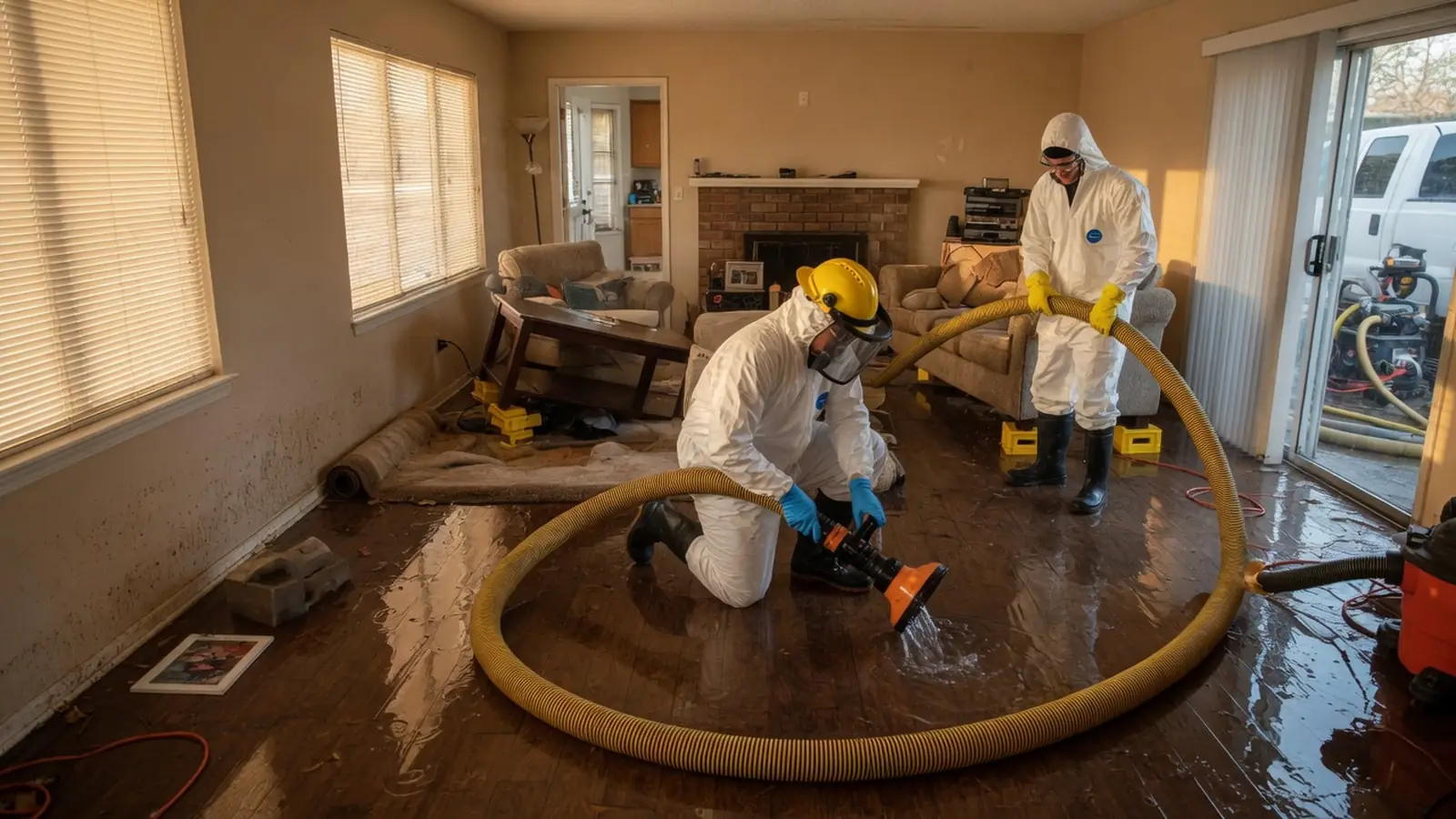
Residential Water Damage Restoration Provo UT
When water breaches your home from a failed supply pipe or severe weather, rapid extraction stops structural rot before it spreads. Unwinterized exterior hose spigots freeze and split interior supply pipes, causing severe water damage to ceilings and walls across residential neighborhoods. Our certified technicians arrive quickly with commercial drying equipment to restore your living space safely.
Water still spreading? Call (801) 555-0144.
Dedicated Residential Water Removal And Drying
About 20% of housing units locally (6,944 of 35,079) were built before 1960, the era of galvanized steel supply lines and cast iron drains that corrode internally over decades.
About 10% of housing units in the area (3,382 of 35,079) were built in the 1960s, overlapping the years aluminium branch wiring was installed alongside indoor plumbing.
About 33% of housing units across our neighborhoods (11,576 of 35,079) were built in the 1970s and 1980s, overlapping the years polybutylene supply piping was commonly installed.
About 62% of housing units in this region (21,902 of 35,079) were built before 1980, the period when asbestos-containing materials and lead paint were still in use and require careful containment during remediation.
NOAA radar recorded 132 hail signatures within about 15 miles of the regional center between 2021-2025 (2021: 14, 2022: 20, 2023: 34, 2024: 52, 2025: 12), creating sudden roof penetrations that drive water into attics.
Homeowners facing sub-surface moisture can rely on our crew for emergency basement flooding cleanup and water extraction to safeguard foundation walls.
On a recent call near the foothills, our crew removed four inches of standing water from a split main valve, deploying low-grain refrigerant dehumidifiers to dry wall cavities down to twelve percent equilibrium.
A frequent pattern echoed in public discussions is that hidden black mold colonizes drywall cavities after a concealed pipe leak, requiring professional containment rather than mere surface spraying.
Our technicians use thermal imaging cameras and calibrated moisture probes at every stage to verify that framing members dry completely before any reconstruction begins.
Our Step-by-Step Restoration Protocol
We follow strict industry standards to extract standing moisture, stabilize humidity, and return structural framing to safe equilibrium.
- Immediate Extraction And Water Shutoff. We isolate the water source immediately to halt continuous flooding across floors. Homeowners experiencing sudden drops in water pressure during cold snaps require emergency shutoff and pipe freeze diagnostics before fractured lines unleash gallons of water behind walls.
- Targeted Thermal Inspection And Pipe Diagnostics. Our technicians locate trapped pockets of water behind drywall using sensitive infrared cameras. As homeowners struggle to safely thaw frozen water supply lines during sub-zero temperatures without causing pressurized pipe bursts, you can learn how our crew manages frozen pipes during sub-zero weather using regulated warming techniques.
- Industrial Dehumidification And Air Moving. We position commercial centrifugal air movers and low-grain refrigerant dehumidifiers to extract vapor from framing, subfloors, and structural joists. Continuous psychrometric monitoring ensures that moisture levels drop steadily without warping remaining architectural materials.
- Sanitization And Rebuild Preparation. All affected structural surfaces receive botanical antimicrobial treatments to neutralize bacterial risks and discourage spore colonization. Once moisture readings reach dry standards, the area is fully prepped for drywall replacement and final finishing.
Our Workmanship And Structural Guarantee
We deliver verified structural drying using calibrated scientific moisture meters rather than guesswork. Every drying chamber is monitored daily with detailed moisture logs documenting relative humidity, ambient temperature, and grains per pound. When dealing with older structures where vintage plumbing materials fail unexpectedly, our technicians follow strict containment protocols to protect indoor air quality without inflated claims.
Emergency Burst Pipe Water Extraction
Rapid response pumping and extraction to remove standing water from broken supply lines. We quickly extract standing liquid from carpets, tile, and hardwood to protect your structural subflooring.
Structural Cavity Drying And Dehumidification
High-velocity air movement and commercial dehumidification designed for saturated framing. We monitor moisture content until studs and subfloors reach certified dry equilibrium.
Drywall Removal And Moisture Containment
Careful removal of water-logged sheetrock and insulation to prevent secondary fungal growth. Our crew seals the work area with plastic barriers to keep living spaces clean and safe.
Our Commitment To Verified Structural Drying
We approach every water intrusion with objective diagnostic testing rather than guesswork. Our technicians rely on thermal imaging, penetrating moisture probes, and psychrometric calculations to confirm that your building materials are thoroughly stabilized before wrapping up any assignment.
- 6Zip Codes Served
- 4Service Areas
- 3Services Offered
Read genuine feedback from local property owners who experienced plumbing failures, storm intrusion, and structural water emergencies.
“A previous restoration company left damp insulation inside our living room ceiling after an upstairs leak. The crew came out, stripped the soaked framing, and set up negative-air containment to thoroughly dry the cavities. They fixed every shortcut the first contractor took and gave us total peace of mind.”
Marcus T.
“When our main floor flooded on a freezing Sunday, this company had industrial extractors running in under an hour. Their moisture mapping was so thorough that I immediately recommended them to my sister across town when her water heater gave out. Watching them safeguard our hardwood subflooring made referring them an easy decision.”
Elena V.
“While removing damaged baseboards along our laundry wall, the technicians uncovered an old secondary supply line leak behind the drywall. Rather than pausing everything or escalating costs, the team coordinated containment, dried the studs, and adjusted their drying plan without missing a beat. Their straightforward communication turned what could have been a nightmare into a routine fix.”
Derek K.
“Our home was scheduled for a buyer inspection in three days when a supply line burst upstairs. The crew deployed commercial dehumidifiers around the clock and provided daily moisture logs that satisfied the inspector completely. We closed on our house on schedule thanks to their relentless focus and speed.”
Chloe B.
Frequently Asked Questions
How quickly should water extraction begin after an indoor pipe bursts?
Water extraction should begin within twenty-four hours to stop mold germination, prevent framing rot, and salvage wet structural sheetrock. Prompt industrial pumping and air movement prevent standing water from traveling deeper into subflooring and lower wall cavities.
How long does the structural drying process typically take?
Complete structural drying typically takes three to five days depending on saturation depth, building materials, and ambient humidity. Technicians continuously take psychrometric readings to verify that internal moisture reaches acceptable industry thresholds before equipment removal.
Does homeowners insurance usually cover emergency water restoration?
Homeowners insurance typically covers sudden and accidental water damage from split pipes, while ongoing neglected leaks are excluded. Our team documents initial moisture readings and photographic evidence to support your claim directly with the insurance adjuster.
Can wet drywall and insulation be dried without removing them?
Saturated fiberglass insulation and badly softened drywall must be removed to allow structural wall studs to dry completely safely. Leaving soggy insulation inside closed wall cavities traps stagnant water and creates an ideal breeding ground for microbial colonization.
What should property owners do immediately before restoration technicians arrive?
Property owners should shut off the main water valve immediately, switch off circuit breakers, and photograph all visible standing water. Moving valuable furniture and delicate personal belongings out of saturated rooms also prevents secondary moisture absorption and staining.